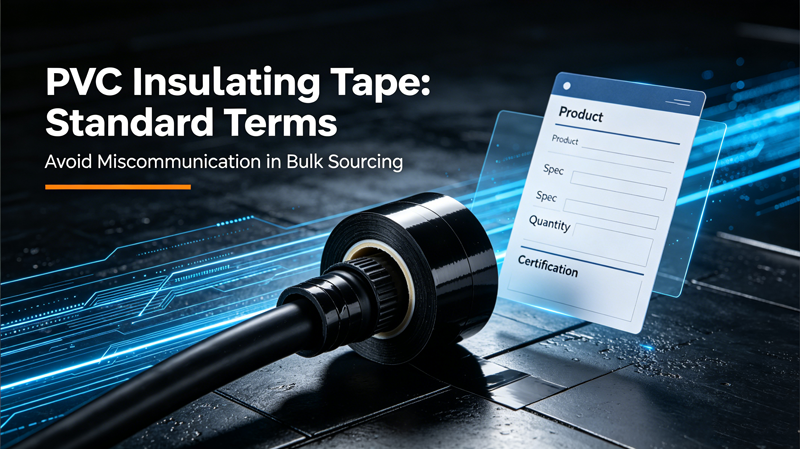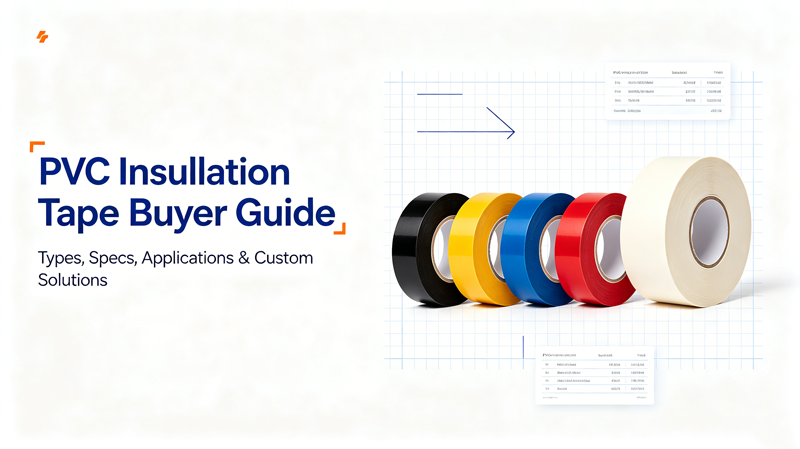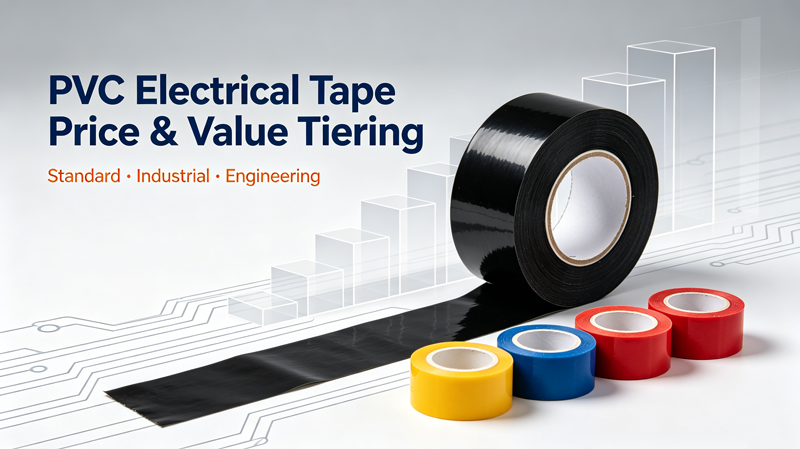
Comprehensive Guide to Electrical Insulating Tape: Performance Analysis, Quality Inspection & Selection Tips
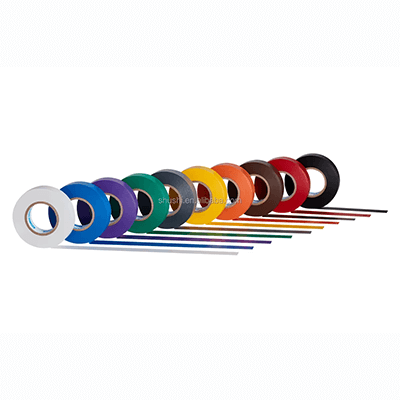
I. Core Significance of Judging the Quality of Electrical Insulation Tape
Tape is widely used in daily life and industrial scenarios. Among them, electrical tape, as a special-purpose tape, its quality is directly related to electrical safety. Inferior products may cause risks such as electric leakage and short circuit. Whether it is ordinary transparent tape, yellow tape, or special tapes like PVC electrical tape, mastering scientific quality identification methods is crucial. The following will share practical tape quality identification techniques from multiple dimensions such as appearance, specifications and performance, taking into account the characteristic differences between general tape and electrical tape.
II. First Dimension of Quality Judgment: Intuitive Appearance Inspection
Appearance is the basic link in judging the quality of electrical insulation tape. Unqualified products can be initially screened by visual inspection, focusing on the following 4 key points:
- Overall Winding Quality: Observe whether the tape is wound neatly, with obvious loose or misaligned winding. High-quality tape is tightly and evenly wound without bulges or depressions; poor-quality tape often has uneven winding due to rough production process.
- Edge Detail Status: Check whether the tape edge has burrs. High-quality tape has precise cutting and smooth edges; tape with many burrs is mostly produced by small workshops with substandard substrate cutting process.
- Substrate Surface Texture: Touch and observe whether the substrate surface is smooth (different types of tape have slightly different substrate characteristics, which need to be judged according to usage). High-quality PVC substrate has a uniform and delicate surface without impurity spots; poor-quality substrate often has rough surface and obvious color difference.
2. PVC Electrical Flame-Retardant Tape: The Mainstream All-Round Choice
PVC electrical flame-retardant tape is the most widely used type at present, with three core functions of insulation, flame retardancy and waterproofing, which perfectly makes up for the performance shortcomings of insulating black tape. Its base material is PVC raw material, which has relatively poor ductility, but with balanced performance and high cost-effectiveness, it has become the first choice for most electrical scenarios such as civil and industrial use. It can play a stable role in wire joint winding, insulation damage repair, and insulation protection of electronic components such as transformers and motors, and is a basic consumable for electrical maintenance and installation.
Based on the above classification logic, common tape types on the market have their own characteristics. Among them, electrical tape has significantly different performance in material and use due to special functional requirements:
1. General Packaging Tapes: Main Force in Daily Scenarios
3. High-Voltage Self-Adhesive Tape: A Specialized Upgraded Type for High-Voltage Scenarios
High-voltage self-adhesive tape was originally designed specifically for higher-level voltage scenarios. Its core advantages lie in excellent ductility and waterproofness, and its waterproof performance is far superior to PVC electrical flame-retardant tape. With this characteristic, it is also widely used in low-voltage scenarios, especially suitable for humid, water-rich and other environments with high waterproof requirements. It should be noted that its strength is not as good as PVC electrical flame-retardant tape. In practical applications, it is often used in conjunction with PVC electrical flame-retardant tape - high-voltage self-adhesive tape is responsible for waterproof sealing, and PVC tape is responsible for enhancing strength and flame retardancy, forming double protection.
2. Construction and Decoration Tapes: Accurate Masking and Fixing
III. Core Suggestions for Electrical Tape Selection
Selection should be closely linked to scenario needs and performance requirements: a small amount of insulating black tape can be used for civil simple insulation; PVC electrical flame-retardant tape is preferred for most conventional scenarios; for high-voltage environments or humid scenarios, it is recommended to adopt a combined solution of high-voltage self-adhesive tape and PVC electrical flame-retardant tape. Regardless of the type selected, it is necessary to purchase through formal channels to ensure that product performance meets standards and ensure electrical safety.
3. Special Functional Tapes: Adapt to Harsh Scenarios (Including Electrical Tape)
4. Brand and Special Purpose Tapes
Different from PVC electrical tape which is used for insulation protection, non-woven single-sided tape takes bonding and fixing as its core function and is widely used in assembly scenarios of multiple industries. The specific uses include:
As a special insulating tape, the core features of glass cloth tape are reflected in key dimensions such as thermal stability, mechanical properties and adhesion performance, as follows:
1. Excellent Thermal Stability: Core Guarantee for High-Temperature Scenarios
Glass cloth tape has excellent thermal stability, which can work continuously at 180℃ and withstand high-temperature impact of 260℃ for a short time. This performance is far superior to ordinary PVC electrical tape (conventional temperature resistance is about 80-100℃), enabling it to adapt to high-temperature working conditions such as Class H heat-resistant insulation, and solving the problem that ordinary electrical tape is prone to aging and insulation failure in high-temperature environments.
2. Excellent Mechanical Properties: Adapt to Complex Scenarios
The product has both flexibility and tear resistance, strong adhesion and not easy to deform, which can perfectly fit various special-shaped surfaces for pasting protection. At the same time, it has high mechanical strength, which can achieve tight and firm wrapping effect when used for coil winding. This feature makes it more reliable than ordinary electrical tape in the insulation of motors and electronic components.
3. No Residue Advantage: Ensure Product Cleanliness
Different from some electrical tapes that are easy to leave residue after high temperature, glass cloth tape will not leave adhesive residue when peeled off after long-term high-temperature curing. This feature can avoid subsequent cleaning processes, improve production efficiency, and is especially suitable for electronic component production scenarios with high requirements for surface cleanliness.
4. High Cost-Effectiveness: Preferred for Import Substitution
While achieving high performance, glass cloth tape has extremely high cost-effectiveness. Its various performance indicators are comparable to many well-known imported brand products, but the procurement cost is lower, providing a high-quality alternative for enterprises pursuing high quality and economy.
Ordinary tape and high-temperature tape have obvious differences in price, performance and applicable scenarios, which are specifically reflected in the following aspects:
1. Price and cost: The price of ordinary tape is much lower than that of high-temperature tape, which is determined by its raw material cost and production process - ordinary tape mostly uses polyethylene substrate and general-purpose pressure-sensitive adhesive, while the cost of special high-temperature resistant raw materials for high-temperature tape is higher.
2. Core performance: Ordinary tape does not have high-temperature resistance and is prone to problems such as adhesive layer melting and substrate deformation in high-temperature environments; at the same time, its insulation and corrosion resistance are also far inferior to high-temperature tape. It is particularly noteworthy that counterfeit high-temperature tapes on the market are mostly impersonated by ordinary tapes, whose high-temperature resistance and insulation are greatly reduced, which will seriously affect product use and even cause safety hazards.
3. Applicable scenarios: There is a clear boundary between the applicable scenarios of the two. High-temperature tape can be used in high-temperature, high-demand industrial scenarios that ordinary tape cannot handle, while ordinary tape is only suitable for conventional environments such as daily packaging and office pasting, and cannot be used in high-temperature working conditions.
The small rolls of substrate after rewinding will be cut into widths for conventional use by a slitting machine, such as 1 cm, 1.5 cm and other different specifications to meet diverse needs. The slitting process must ensure a flat cut to avoid burrs affecting use. PVC electrical tape also needs to undergo sampling inspection of insulation performance in this link, and can be packaged and delivered only after passing the inspection. In the entire production process, film blowing and gluing are the core links that determine product quality, and the subsequent rewinding and slitting have relatively little impact on quality.
Carefully inspect the surface state of the tape, including whether both sides are sticky and whether there are gaps. High-quality tape is not sticky on both sides and is tightly wound without obvious gaps; if both sides are sticky or there are irregular gaps, it indicates poor production process and may have uneven adhesion. For electrical tape, uneven surface may also affect the sealing of insulation wrapping, so strict inspection is required.
High-temperature double-sided tape can be processed into a non-metallic compensator, a flexible connection device for pipes, which is specially designed to solve the damage caused by thermal expansion and contraction of pipes. Its base material, silicone cloth, has high temperature resistance, corrosion resistance, aging resistance, and good elasticity and flexibility. It can adapt to the deformation needs of pipes and is widely used in industrial fields such as petroleum, chemical industry, cement and energy, and is an important guarantee for the stable operation of pipe systems.
Fire resistance refers to the ability of an insulating material to resist combustion when in contact with a flame or to prevent continuous combustion when leaving the flame. With the increasing application of insulation materials such as PVC insulation tape in various scenarios (especially closed environments such as buildings and home appliances), the requirements for their fire resistance have become increasingly strict. The industry improves the fire resistance of insulation materials through various technical means such as adding environmentally friendly flame retardants. For PVC insulation tape, higher fire resistance means that when encountering open flames or high temperatures, it can more effectively prevent the spread of combustion, reduce the risk of fire, and ensure the safety of electrical systems and personnel.
Tension is an important manifestation of the quality of the tape substrate. During the test, you can pull the tape. If it breaks easily, it means the substrate has poor toughness and is an inferior product; the substrate of high-quality tape (such as transparent film, PVC substrate of electrical tape) has excellent toughness and is not easy to break. Especially for electrical tape, insufficient tension is easy to break during winding and use, affecting the insulation protection effect.
Sealing is an important auxiliary performance of insulation materials such as PVC insulation tape, referring to the material's ability to seal and isolate liquids or gases such as oil and water. Excellent sealing can prevent corrosive substances such as moisture and oil from invading the inside of wires or joints, avoiding problems such as reduced insulation performance and corrosion of metal conductors caused by moisture and oil pollution. For PVC insulation tape used outdoors, in humid environments or industrial oil-contaminated scenarios, its sealing directly determines the durability of insulation protection. Better sealing means stronger environmental adaptability and longer service life of the product.
Analysis of Characteristics and Advantages of Automotive Harness Tape Under Electrical Tape Category
Complete Analysis of Tape Classification Including Electrical Tape Bilingual Illustrated Guide
Related Article