
PVC Electrical Tape: Value Tiering, Not Just Cost – Match Grade to Application
author: Lily
2026-05-18
Introduction
If you are a global electrical contractor, wholesaler, importer or DIY user, you must have encountered a confusing question: Why do PVC electrical tapes with seemingly identical sizes show huge price gaps on the market? Some low-cost options look decent but fail quickly under high temperature, outdoor exposure or frequent bending; mid-priced products work well for regular wiring but cannot withstand harsh industrial conditions; premium tapes carry higher quotes yet are widely trusted for critical power engineering projects.
The core problem is never merely the raw material cost. The real difference lies in performance tiering. Each price range corresponds to a specific value, material formula, technical standard and service life. Choosing the wrong grade will lead to hidden safety hazards, frequent replacements and unnecessary cost waste. This article classifies mainstream PVC electrical tapes into three clear tiers, explains how performance determines value and price, sorts out matching rules for different usage scenarios, and helps you avoid common low-price traps and make precise purchasing decisions.
1. Three Core Value Tiers of PVC Electrical Tape
Combined with global industry standards (UL 510, ASTM D1000, RoHS, REACH), raw material formulas, physical and electrical properties, and actual application requirements, we divide PVC electrical tapes into Standard Grade, Industrial Grade and Engineering Grade. Each tier has fixed positioning, core parameters and applicable scenarios.
1.1 Standard Grade (Entry-level & Daily Use)
This is the most cost-effective basic type for low-demand scenarios, focusing on fundamental insulation and bundling functions.
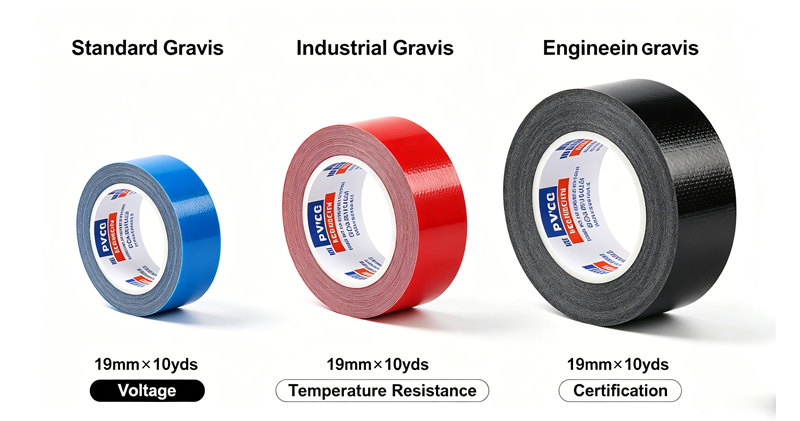
- Core Specifications & Performance Thickness: 0.12mm–0.14mm; Rated voltage: 300V–450V; Dielectric strength: 5–6kV/mm; Elongation: 120%–150%; Temperature resistance: 0℃ ~ 60℃. Ordinary general-purpose PVC resin and common rubber adhesive are adopted, with basic anti-dust and anti-moisture properties. No strict flame-retardant formula, and no professional international safety certifications.
- Basic Features Light weight, easy to wrap, affordable price, simple production process. It can meet short-term indoor wiring and temporary binding needs, but is prone to brittleness, degumming and aging after long-term use, exposure to sunlight or high temperature.
- Main Colors & Sizes Mainly black; conventional sizes: 19mm × 10yds, 19mm × 15yds. Custom colors and printed logos are not supported in mass production.
1.2 Industrial Grade (Mid-range & General Engineering)
The mainstream choice for global commercial and industrial wiring, balancing price and comprehensive performance, and the most widely sold tier in cross-border wholesale.
- Core Specifications & Performance Thickness: 0.15mm–0.17mm; Rated voltage: 600V (universal standard); Dielectric strength: 7–8kV/mm; Elongation: 160%–180%; Temperature resistance: -10℃ ~ 80℃. Optimized flexible PVC substrate and high-tack rubber/acrylic adhesive are used. Equipped with basic flame-retardant and anti-UV additives, complying with RoHS and REACH environmental standards.
- Basic Features Excellent conformability, tightly fits curved wires and elbows without cracking. Stable adhesion, anti-aging and moderate weather resistance. It can work stably for a long time in conventional indoor and semi-outdoor environments, and supports normal mechanical friction. Most products pass basic third-party testing.
- Main Colors & Sizes Black, red, yellow, blue (for phase identification); complete standard sizes, supporting small-batch color customization and simple logo printing.
1.3 Engineering Grade (High-end & Critical Projects)
Premium heavy-duty products designed for harsh environments and high-standard power projects, representing the top performance of conventional PVC electrical tape.
- Core Specifications & Performance Thickness: 0.18mm–0.22mm; Rated voltage: up to 1000V; Dielectric strength: ≥8kV/mm; Elongation: ≥180%; Temperature resistance: -18℃ ~ 105℃. High-purity electrical-grade PVC resin and weather-resistant composite adhesive are selected, with high-efficiency flame-retardant, anti-UV and low-temperature resistant formulas. Most products obtain UL, CSA and other electrical safety certifications.
- Basic Features All-weather performance, resisting extreme cold, high temperature, strong sunlight, rain and salt spray. Super tensile and anti-tearing ability, not easy to deform under long-term vibration and mechanical extrusion. Stable insulation performance after years of outdoor use, zero degumming or peeling. Strict production inspection and full batch testing.
- Main Colors & Sizes Full color range, supporting OEM/ODM customized printing, special length and width; widely used standard rolls and large industrial jumbo rolls.
2. How Performance Tiers Drive Price Differences
Price is the external manifestation of value. The tier gap of PVC electrical tape originates from the full-chain differences in raw materials, formulas, production processes, quality control and certifications. It is not a simple "cost markup", but a reasonable pricing based on performance and service life.
2.1 Raw Material Formula (The Fundamental Gap)
Raw materials account for the largest proportion of the overall value. The three tiers adopt completely different PVC resin, adhesive and functional additives:
- PVC Substrate: Standard Grade uses common recycled or general PVC raw materials with low purity, low flexibility and poor anti-aging ability. Industrial Grade uses brand-new electrical-grade PVC particles with stable molecular structure. Engineering Grade adopts high-purity special PVC resin with low volatile content, which can maintain physical stability in extreme temperatures, and the raw material cost is 25%–40% higher than Standard Grade.
- Adhesive: Standard Grade uses cheap ordinary glue, which is easy to fail in humid environments. Industrial Grade uses high-tack rubber adhesive with balanced adhesion. Engineering Grade selects weather-resistant acrylic composite adhesive, with adhesion lasting for more than 5 years outdoors, and the adhesive cost increases by 15%–30%.
- Functional Additives: Engineering and Industrial Grades are added with flame retardants, anti-UV agents and plasticizers according to standards; Standard Grade basically has no extra functional additives, which is the key reason for its poor environmental adaptability.
2.2 Production & Quality Control Standards
- Production Process: Standard Grade mostly adopts semi-automatic production with a high product loss rate and simplified processes such as slitting and winding. Industrial and Engineering Grades use fully automatic production lines with precise thickness control and neat winding, and the process cost increases with performance requirements. Engineering Grade also adds special surface treatment processes to enhance wear resistance.
- Testing & Inspection: Standard Grade only conducts simple manual sampling, with no strict electrical performance testing. Industrial Grade implements batch testing of insulation strength and elongation. Engineering Grade conducts full inspection for each roll, plus long-term aging simulation tests, with higher labor and equipment depreciation costs.
2.3 Certification & Compliance Costs
Export-oriented products have obvious certification premium. Standard Grade generally has no international certifications and cannot enter high-standard markets such as Europe and North America. Industrial Grade is compliant with RoHS and REACH, with basic annual testing fees. Engineering Grade needs to apply for UL, CSA and other professional electrical safety certifications, with high annual audit and testing costs, which directly pushes up the unit price.
2.4 Service Life & Comprehensive Value
The most hidden value gap lies in service life. A roll of Standard Grade tape may age and fail within 6–12 months outdoors. Industrial Grade can work stably for 2–3 years. Engineering Grade has a service life of more than 5 years in harsh outdoor environments. Calculated by the annual average use cost, high-tier products are more cost-effective in long-term projects.
2.5 Customization Capability
High-tier products support color matching, logo printing, special size customization and private label services, which require additional plate-making and process costs. Low-tier products only provide standard neutral rolls without any customization services.
3. Real Application Demands for Different Tiers

Different usage scenarios have clear requirements for insulation, temperature resistance, weather resistance and service life. Matching the correct tape tier is the premise of safe and efficient use.
3.1 Standard Grade: Scenarios with Low Requirements & Short Service Cycles
- Household temporary wiring, indoor small electrical maintenance, daily wire bundling;
- Low-voltage equipment in rural areas, temporary construction sites, short-term project wiring;
- Scenarios with no exposure to sunlight, rain, high temperature and vibration, and regular replacement within 1 year. Not recommended: Outdoor wiring, high-voltage equipment, engineering projects with long-term operation.
3.2 Industrial Grade: Mainstream Commercial & General Industrial Scenarios
- Indoor and outdoor wiring of residential buildings, office buildings, shopping malls and other civil buildings;
- Conventional mechanical equipment, electrical cabinets, household appliance internal wiring;
- General engineering projects, medium-voltage lines (below 600V), phase color identification;
- Scenarios with occasional exposure to sunlight and humidity, requiring stable use for 2–3 years. The most cost-effective choice for 80% of global wholesale and general trade orders.
3.3 Engineering Grade: Harsh Environments & High-standard Key Projects
- Outdoor power lines, overhead cables, underground pipeline insulation;
- Automotive, marine, chemical and high-vibration industrial equipment wiring;
- National infrastructure projects, municipal power engineering, high-voltage equipment above 600V;
- Extreme environments such as high temperature, severe cold, coastal salt spray and rainy areas;
- Projects requiring long-term stable operation (more than 5 years) and strict safety certifications (Europe, North America, Australia).
4. Low-price Trap: The Essence of Grade Mismatch
Many buyers blindly pursue ultra-low prices and choose Standard Grade tapes for industrial and engineering scenarios, which is the most common grade mismatch trap, not a simple "cost problem".
4.1 Common Traps & Consequences
- Use low-grade tape for outdoor engineering: The tape becomes brittle and degums within a few months, insulation fails, leading to electric leakage, short circuit and potential fire hazards. Repeated replacements increase labor and comprehensive costs.
- Uncertified products enter regulated markets: Products without RoHS, UL certifications are detained by customs, resulting in cargo loss and order delays.
- Insufficient dielectric strength for high-voltage lines: Cannot withstand standard voltage, causing electrical equipment failure and engineering rework.
- Fake high-performance labels: Some merchants label low-grade tapes as "flame-retardant, high-temperature resistant" at a medium price, with actual performance far below the marked parameters.
4.2 Core Reminder
The low price of low-grade tapes is based on the reduction of material standards and performance. It is only limited to low-demand temporary use. Once mismatched with high-standard scenarios, the hidden risks and subsequent losses will far exceed the money saved on purchasing. Price is linked to value forever.
5. Practical Guide: How to Select the Right PVC Electrical Tape Tier
Follow the 5-step selection method to quickly lock the matching grade and avoid mistakes:
- Confirm working voltage: Below 450V → Standard Grade; 600V universal voltage → Industrial Grade; above 600V or high-voltage projects → Engineering Grade.
- Distinguish usage environment: Pure indoor & no special requirements → Standard Grade; indoor + semi-outdoor, normal temperature and humidity → Industrial Grade; long-term outdoor, extreme temperature, salt spray, vibration → Engineering Grade.
- Check required certifications: Sold to Europe, America and other regions → Prioritize Industrial/Engineering Grade with RoHS, UL certificates; used in domestic ordinary areas → Standard Grade is acceptable.
- Define service life requirement: Temporary use (within 1 year) → Standard Grade; stable use (2–3 years) → Industrial Grade; long-term use (more than 5 years) → Engineering Grade.
- Determine customization demand: Need color classification, logo printing and private label → Choose Industrial or Engineering Grade; only standard black rolls → Standard Grade is available.
6. Grade & Application Matching Matrix
| Product Tier | Core Voltage | Temperature Range | Key Advantages | Typical Application Scenarios | Target Buyer Groups |
|---|---|---|---|---|---|
| Standard Grade | 300V–450V | 0℃ ~ 60℃ | Lowest price, basic insulation | Household temporary wiring, short-term construction, indoor bundling | Retail stores, small maintenance teams, low-price regional wholesalers |
| Industrial Grade | 600V | -10℃ ~ 80℃ | Balanced performance, flame-retardant, RoHS compliant | Civil engineering, household appliances, general industrial wiring, phase marking | Large wholesalers, general contractors, cross-border general trade merchants |
| Engineering Grade | 600V–1000V | -18℃ ~ 105℃ | All-weather, UL certified, anti-aging & anti-corrosion | Outdoor power projects, automotive/marine wiring, high-standard engineering | Engineering companies, brand distributors, European & American importers |
7. FAQ
Q1: Is the thicker PVC electrical tape always better?
A: Not exactly. Thickness is matched with the tier and scenario. Standard Grade (0.12–0.14mm) is flexible for temporary wrapping. Engineering Grade (0.18–0.22mm) is thicker for stronger mechanical protection and insulation. Excessively thick tape will lose conformability and is not easy to wrap on fine wires. Choose the corresponding thickness according to the tier and usage.
Q2: Can Industrial Grade tape fully replace Engineering Grade to save costs?
A: No. Industrial Grade is insufficient in extreme temperature resistance, UV resistance and long-term aging resistance. It will fail quickly in outdoor, high-cold or high-temperature harsh environments. For key projects, replacing Engineering Grade with Industrial Grade will bring serious safety risks.
Q3: What certifications must be checked for export orders?
A: Export to Europe: Prioritize RoHS & REACH compliance; Export to North America: Require UL 510 or CSA certification; Southeast Asia, Africa and other loose-standard regions: Standard Grade without certifications is acceptable.
Q4: Why do tapes with the same size have different prices from different manufacturers?
A: The core is tier difference. Even with the same size, manufacturers use different raw materials, formulas and testing standards, resulting in different performance tiers and natural price gaps. Do not judge quality only by size.
Q5: Does colored tape belong to high-grade products?
A: Colored tape is just for phase identification. Standard Grade also has colored styles. The real judgment standard is still voltage resistance, temperature resistance and certifications, not color.
Q6: What is the service life difference between the three tiers in outdoor environments?
A: Standard Grade: 6–12 months (easy to age); Industrial Grade: 2–3 years (stable performance); Engineering Grade: More than 5 years (all-weather resistance).
PVC Electrical Tape Price & Value Tiering: It’s Not Just About Raw Material Cost
PVC Insulation Tape Price System: Full B2B Guide for Cost Analysis & Procurement
Related Article
This guide unifies standard terms of PVC insulating tape, clarifies naming differences in different scenarios, fixes common misunderstandings and offers templates for precise procurement inquiries.
PVC Tape for Electrical Insulation: Standard Naming, Terminology & Accurate Inquiry Guide

This guide covers standard electrical terms of PVC electrical tape, explains key parameters and offers scene-matched selection suggestions for electrical engineering buyers.
PVC Electrical Tape: Professional Terminology & Application Selection Guide
This buyer guide covers definition, core forms, specs, applications and comparisons of pvc insulation tape, answering common procurement questions and offering OEM customization solutions.
PVC Insulation Tape: Definition, Core Forms & Complete Buyer Guide
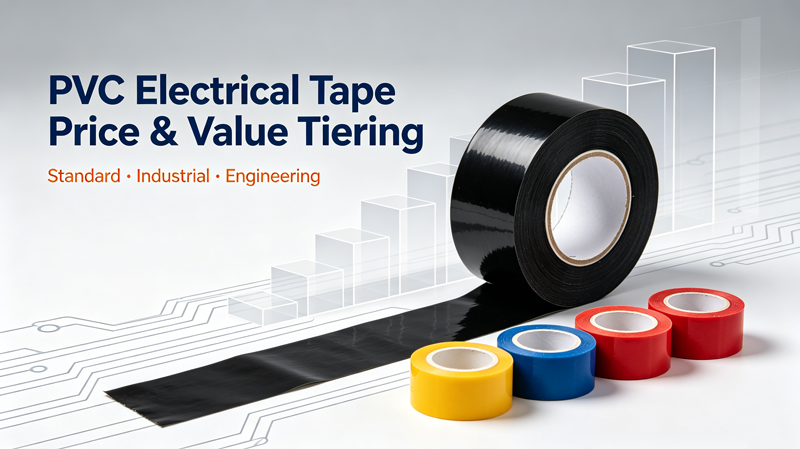
This article analyzes PVC electrical tape prices based on three performance grades rather than raw material costs, explains price differences, warns of low-cost pitfalls, and guides buyers to select matching tape for different wiring uses.
PVC Electrical Tape Price & Value Tiering: It’s Not Just About Raw Material Cost