
Wire Harness Manufacturer: A Complete Evaluation Framework for Sourcing & Partner Selection
author: Lily
2026-05-14
Wire harnesses are the nervous system of electronic and electrical equipment, connecting components, transmitting signals and power across automotive, industrial, aerospace, home appliances and other fields. A qualified wire harness manufacturer is never a simple processing factory, but a system integration executor. A finished wire harness is the combined result of professional design, mature craftsmanship, precise assembly and strict performance verification. Most field quality failures of wire harnesses stem from improper manufacturing execution, rather than original design flaws. For OEMs, Tier suppliers and global procurement teams, selecting a reliable wire harness partner requires a systematic evaluation standard covering comprehensive capabilities, process control, quality assurance and delivery capacity. This guide builds a full set of assessment frameworks to help you make accurate sourcing decisions.
1. Four Core Capability Dimensions of Professional Wire Harness Manufacturers
The overall strength of a wire harness supplier is reflected in four interlocked core dimensions, which form the foundation of stable cooperation:
1.1 R&D & Design Capability
Excellent manufacturers have independent design teams to convert customer system drawings into feasible harness solutions. Services include circuit optimization, wiring layout planning, loom design and prototype development. They can also provide customized solutions for special working conditions such as high temperature, vibration, waterproof and anti-interference.
1.2 Production & Process Capability
It covers raw material cutting, stripping, crimping, soldering, assembly, molding and final forming. The core lies in standardized process settings to ensure every production link complies with industry specifications and customer requirements.
1.3 Quality Control System
Full-cycle quality management runs through incoming material inspection, in-process monitoring and finished product testing. Standardized testing items include crimp force detection, continuity test, insulation resistance test, voltage resistance test and durability test.
1.4 Delivery & Supply Chain Management
Reasonable production scheduling, sufficient inventory of conventional materials, flexible production line allocation and complete logistics coordination ensure on-time delivery for bulk orders, urgent orders and recurring orders.
2. Key Control Points of Production Process (Not Routine Process Description)
Rather than listing production steps in chronological order, professional manufacturers focus on process control points to eliminate hidden risks in advance:
- Incoming Material Control: 100% inspection of wires, terminals, connectors, tapes and looms; reject unqualified raw materials to cut off quality risks at the source.
- Crimping & Soldering Control: Real-time monitoring of crimp height, width and tensile strength; fixed standards for soldering temperature, time and solder volume to avoid virtual soldering and desoldering.
- Assembly & Routing Control: Standardize wiring paths, binding methods and loom installation; prevent wire twisting, excessive bending and loose assembly.
- Semi-finished Product Inspection: Random sampling and full inspection at key process nodes to prevent defective products from flowing into the next procedure.
- Finished Product Verification: Complete electrical performance, appearance and size testing before warehousing; only qualified products are allowed to be delivered.
3. Automatic Production vs Manual Operation: Application & Selection

Wire harness production adopts a mixed mode of automation and manual work, and the matching mode depends on product type, precision requirement and production volume:
3.1 Automated Production Lines
Suitable for standard, large-volume wire harnesses (automotive conventional harnesses, household appliance internal harnesses).
- Advantages: Stable product consistency, high production efficiency, low human error, suitable for mass orders and cost control.
- Main equipment: Automatic wire cutting & stripping machines, automatic crimping machines, continuous testing equipment.
3.2 Manual & Semi-automatic Operation
Suitable for customized, low-volume, high-precision or complex-structured harnesses (aerospace harnesses, medical equipment harnesses, special industrial harnesses).
- Advantages: Flexible for complex wiring, special molding and small-batch customized orders; meet personalized production requirements.
- Features: Strict worker operation training and post supervision are required to guarantee product quality.
3.3 Industry Matching Suggestion
For long-term bulk procurement, prioritize manufacturers with high automation rate; for prototype development, small-batch customization and high-precision products, select suppliers with experienced skilled teams and flexible semi-automatic production lines.
4. Hierarchical Classification of Wire Harness Manufacturers
According to technical strength, service scope, application field and qualification certification, manufacturers can be divided into three tiers for targeted screening:
4.1 Tier 1: High-end Professional Manufacturers
Target markets: Aerospace, new energy vehicles, medical equipment, industrial automation. Core advantages: Complete R&D system, top-level industry certifications (IATF 16949, ISO 13485, aerospace standard certification), full set of high-precision testing equipment, capable of undertaking high-standard customized projects and supporting full-process technical cooperation.
4.2 Tier 2: Mid-range Comprehensive Manufacturers
Target markets: Commercial vehicles, general industrial equipment, intelligent hardware. Core advantages: Mature production technology, complete quality control, stable delivery, cost-effective, good at standard products and conventional customized harnesses; suitable for most medium and large OEM procurement demands.
4.3 Tier 3: Basic Processing Factories
Target markets: Low-voltage simple harnesses, low-end household appliances, ordinary electronic products. Core advantages: Low production cost, simple production process; limited R&D capacity and testing standards, only for low-demand standard products.
5. Capability Requirements for Manufacturers in Different Application Scenarios
Different application fields put forward differentiated technical and production requirements for wire harness suppliers:
- Automotive Wire Harness: Must pass IATF 16949 certification; require anti-vibration, high and low temperature resistance, flame retardancy; strict standards for crimping reliability and service life.
- Industrial Equipment Harness: Focus on waterproof, dustproof, oil resistance and anti-electromagnetic interference; adapt to harsh factory working environments.
- Medical Equipment Harness: Comply with medical safety standards; require insulation safety, non-toxic materials and high stability to avoid equipment failure.
- Consumer Electronics Harness: Pursue miniaturization, lightweight and neat wiring; strict requirements on appearance and assembly precision.
- Aerospace Harness: Ultra-high reliability, radiation resistance, extreme temperature resistance; the highest standards for materials, craftsmanship and testing.
Procurement teams shall match manufacturers according to the industry attributes and use environment of their own products.
6. Main Sources of Wire Harness Quality Risks
Most quality problems occur in the manufacturing link, and the main risk points are summarized as follows:
- Unqualified Raw Materials: Inferior wires with poor insulation, low-strength terminals and non-standard adhesive tapes directly cause short circuit, poor contact and wire aging.
- Unstandard Process Operation: Unqualified crimping force, insufficient soldering, irregular wiring and loose binding lead to product failure during use.
- Missing Process Inspection: Skipping semi-finished product testing and relying solely on final inspection cause defective products to flow to customers.
- Unstable Production Environment: Dust, humidity and temperature changes affect the performance of wires and connectors.
- Unprofessional Customization Matching: The manufacturer fails to reasonably match looms, binding tapes and fixing accessories according to the use scenario, resulting in loose harnesses and wire wear.
7. Standard Framework to Evaluate a Wire Harness Manufacturer
Follow this multi-dimensional checklist to complete supplier assessment efficiently:
7.1 Qualification & Certification Verification
Check ISO quality system certification, industry special certification, product safety certification and customer qualification audit records.
7.2 On-site Production Audit
Inspect production workshop environment, equipment configuration, automation level and process control rules.
7.3 Quality System Inspection
Check inspection procedures, testing equipment, quality records and defective product handling mechanisms.
7.4 Technical & R&D Capacity Assessment
Evaluate independent design capability, prototype development speed and customized solution experience.
7.5 Delivery & Supply Chain Audit
Verify production capacity, material reserve capacity, order scheduling rules and on-time delivery rate.
7.6 Sample & Batch Product Test
Conduct performance test, durability test and field application test on supplied samples and trial batches.
7.7 After-sales & Technical Service
Understand after-sales response speed, problem solving efficiency and long-term cooperation supporting capacity.
8. Why Low-cost Manufacturers Bring Higher Comprehensive Risks
Many buyers tend to choose ultra-low-cost suppliers for cost reduction, but this will bring hidden losses far beyond the price advantage:
- Cutting Corners on Raw Materials: Low-cost manufacturers use inferior wires, terminals and tapes to reduce costs, leading to frequent product failures and increased after-sales maintenance costs.
- Simplifying Process & Inspection: Cancel key testing links and standard processes, resulting in high defective rate of bulk goods.
- Unstable Delivery Capacity: Insufficient material reserve and backward production equipment easily cause order delay, affecting the buyer's own production schedule.
- Lack of Technical Support: No professional R&D and after-sales teams; unable to solve technical problems and product iteration demands in the later stage.
- Potential Compliance Risks: Unqualified products may fail industry safety certification, resulting in market sales stagnation and brand loss.
In the long run, the comprehensive cost of cooperating with low-cost manufacturers is far higher than the saved purchase cost.
9. The Connection Between Wire Harness Manufacturers & Auxiliary Materials (Tape, Loom & Accessories)
Wire harness is a complete assembly combined with main materials and auxiliary materials, and professional manufacturers will carry out overall matching and control of supporting accessories:
- Adhesive Tape & Wrapping Tape: Used for wire binding, insulation reinforcement, wear resistance and flame retardant protection. Formal manufacturers select tapes with matching flame retardancy, temperature resistance and adhesion according to product application scenarios, and standardize wrapping methods and lap width.
- Loom & Protective Sleeve: Applied to parts prone to friction, bending and exposure to harsh environments to protect internal wires. Manufacturers will select loom specifications and materials based on product vibration frequency, temperature and installation space.
- Fixing Accessories & Clips: Ensure the harness is firmly installed and avoid displacement and wear during operation. Professional suppliers will complete the overall matching of main harness and accessories in the design and production stage.
A high-quality wire harness solution is the integrated result of main wire, terminals, connectors, tapes, looms and all accessories. Excellent manufacturers take charge of the overall matching and quality control of the whole set of materials.
10. FAQ
Q1: What certifications must a formal wire harness manufacturer have?
A: Basic certification is ISO 9001. For automotive harnesses, IATF 16949 is mandatory; for medical equipment harnesses, ISO 13485 is required. Products for European and American markets also need corresponding safety certifications such as UL and CE.
Q2: How to distinguish automated production and manual production harnesses from finished products?
A: Automatically produced harnesses have uniform crimping, neat wiring and consistent appearance; manually assembled complex harnesses have flexible routing, which is suitable for special structural products, but requires stricter manual operation standards.
Q3: Can small-batch customized wire harnesses be delivered quickly?
A: Professional manufacturers with complete material reserves and flexible production lines can support rapid prototyping and small-batch production. It is recommended to confirm the prototype cycle and bulk order delivery cycle before cooperation.
Q4: What is the normal inspection frequency for wire harnesses during production?
A: Standard process requires full inspection for key processes such as crimping and finished product electrical performance; regular random sampling for semi-finished products, with complete inspection records retained.
Q5: How to solve the problem of harness wear and loose wiring in actual use?
A: First check whether the loom, wrapping tape and fixing accessories are reasonably matched. It is suggested to require the manufacturer to optimize the protection scheme and binding process according to the actual use environment.
Q6: Is the lower the price of wire harness, the better?
A: No. Wire harness is a functional component related to equipment safety. Excessively low price often means reduced material and process standards. It is recommended to balance cost and quality, and select suppliers with reasonable price and stable quality.
PVC Insulation Tape Price System: Full B2B Guide for Cost Analysis & Procurement
PVC Tape Pricing System: A Complete Guide for B2B Buyers
Related Article
This guide unifies standard terms of PVC insulating tape, clarifies naming differences in different scenarios, fixes common misunderstandings and offers templates for precise procurement inquiries.
PVC Tape for Electrical Insulation: Standard Naming, Terminology & Accurate Inquiry Guide

This guide covers standard electrical terms of PVC electrical tape, explains key parameters and offers scene-matched selection suggestions for electrical engineering buyers.
PVC Electrical Tape: Professional Terminology & Application Selection Guide
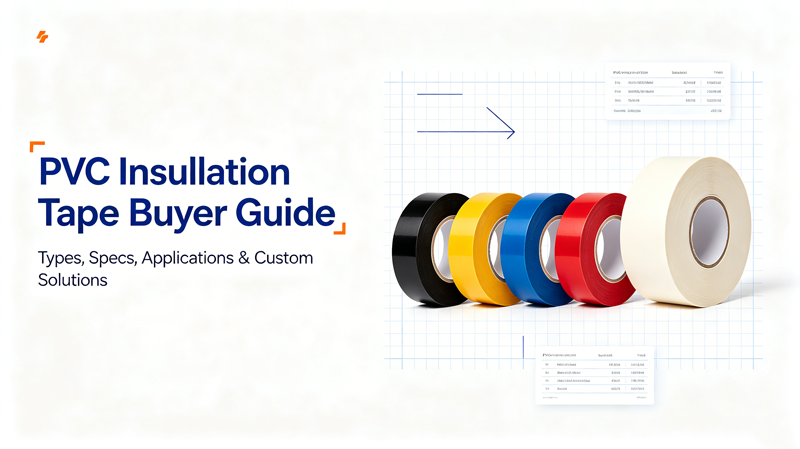
This buyer guide covers definition, core forms, specs, applications and comparisons of pvc insulation tape, answering common procurement questions and offering OEM customization solutions.
PVC Insulation Tape: Definition, Core Forms & Complete Buyer Guide
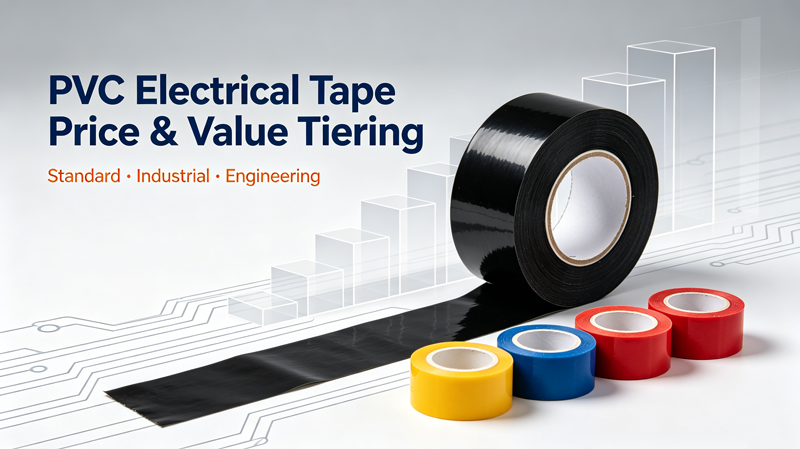
This article analyzes PVC electrical tape prices based on three performance grades rather than raw material costs, explains price differences, warns of low-cost pitfalls, and guides buyers to select matching tape for different wiring uses.
PVC Electrical Tape Price & Value Tiering: It’s Not Just About Raw Material Cost