
PVC Electrical Tape Price & Value Tiering: It’s Not Just About Raw Material Cost
author: Lily
2026-05-19
Introduction
Most electrical contractors, importers and wholesale buyers share one confusing question: Why do pvc electrical tape roll price ranges differ drastically across suppliers? You may notice budget rolls cost a fraction of premium engineering tape, yet cheap options cannot be used for long-term power projects, while mid-priced industrial tape is overkill for simple temporary household repairs. The core confusion is not pricing itself, but mismatched performance tiers.
PVC electrical insulation tape price is never determined by raw material cost alone. Instead, it follows a clear value-tier system: each performance grade carries matched safety, durability and environmental resistance, which directly sets its market price bracket. This guide breaks down three core tiers, explains what drives price gaps, matches grades to real application scenarios, and helps you avoid costly low-price traps.
1. Three Core Value Tiers of PVC Electrical Insulation Tape
All PVC electrical tapes fall into Standard Grade, Industrial Grade and Engineering Grade, with distinct formulation, testing standards and price ranges.
Standard Grade (Budget Temporary Use)
- Basic thin PVC film, low proportion of flame retardant & anti-UV additives, ordinary rubber adhesive
- Voltage rating: 600V, narrow temperature tolerance (-10℃ ~ 60℃)
- No UL/CSA certification; prone to hardening, glue residue and delamination after 6–12 months
- Typical pvc electrical tape roll price: $0.12–$0.28 per standard roll (19mm×20m)
Industrial Grade (Long-Term General Wiring)
- Medium-thickness uniform PVC substrate, balanced flame retardancy, stable rubber adhesive with strong initial tack
- Certified UL/ROHS, working temperature range -20℃ ~ 80℃, stable insulation for 3–5 years indoor use
- Consistent thickness without wrinkling, low migration glue, available in full color coding (black, yellow, blue, red)
- Typical pvc electrical insulation tape price: $0.29–$0.55 per roll
Engineering Grade (Heavy-Duty Harsh Environment)
- High-purity PVC compound with high-grade plasticizers, heavy flame retardant, UV & corrosion resistant formula
- Full international certifications (UL, VDE, IEC), wide temperature range (-30℃ ~ 105℃), high dielectric strength
- Anti-aging, waterproof, no cracking under long-term outdoor, high-heat or humid conditions; suitable for power engineering, solar wiring, automotive harnesses
- Typical pvc electrical tape price: $0.58–$1.5+ per roll
2. How Performance Tiers Directly Control PVC Electrical Tape Price
Price gaps between tiers come from value-based formulation and production differences, not just basic PVC resin cost:
- PVC Film Raw Material Standard grade uses recycled PVC with high filler content to cut cost; industrial & engineering grades adopt virgin PVC resin with premium plasticizers (DINP/DOTP) for flexibility and anti-degradation, raising base material cost by 15%–30%.
- Adhesive Coating Quality Budget tape applies thin, uneven glue layers; engineering tape uses thicker, balanced rubber/acrylic adhesive with stable adhesion without residue. High-performance adhesive accounts for 25%–35% of total material cost.
- Safety Additives & Certifications Flame retardants, UV stabilizers and anti-oxidants add extra production expense. UL, VDE and third-party lab testing also create certification costs only included in industrial & engineering tiers.
- Precision Manufacturing Control Engineering-grade jumbo log rolls adopt automatic calendering for ±0.01mm thickness tolerance, while standard tape uses low-precision equipment with uneven film, reducing equipment and QC labor input for cheap products.
- Long-Term Service Value Low-tier tape requires frequent rework and replacement; engineering tape maintains stable insulation for 8–10 years, cutting maintenance and labor expenses for large projects.
3. Real Application Demands for Each Grade
Standard Grade
- Temporary household wiring fixes, short-term indoor labeling, low-voltage temporary equipment
- Small DIY repair shops with short service cycle requirements
Industrial Grade
- Indoor distribution boxes, appliance wiring, commercial building cable harness, color phase marking
- Medium-volume wholesale for electricians, general factory wiring
Engineering Grade
- Outdoor power projects, solar panel combiner boxes, high-temperature motor wiring, automotive cable wrapping
- Municipal engineering, mining equipment, marine humid environment wiring, long-term permanent insulation
4. The Low-Price Trap: Losses from Grade Mismatch
Many buyers only compare pvc electrical tape roll price and select ultra-low-cost standard tape for industrial or engineering projects, leading to hidden losses far exceeding initial savings:
- Safety hazards: Poor flame retardancy causes fire risks for high-load wiring; degraded film leads to insulation breakdown and short circuits.
- Extra labor cost: Cheap tape hardens, peels or leaves sticky residue within one year, requiring full re-insulation of thousands of wire joints.
- Project compliance failure: Uncertified standard tape fails third-party site inspections, delaying project acceptance.
- Reputation loss: Contractors and distributors face customer complaints or returns due to premature tape failure.
Low pricing does not equal cost savings — it is a mismatch between product performance tier and application demand.
5. How to Select the Right PVC Electrical Tape Grade
- Confirm service life: Temporary repair → Standard Grade; indoor permanent wiring → Industrial Grade; outdoor/high-temp long-term projects → Engineering Grade
- Check environment conditions: UV exposure, high humidity, continuous heat or high voltage requires Engineering Grade
- Verify certification requirements: Government, export and industrial projects need UL/VDE certified Industrial or Engineering tape
- Calculate total cost of ownership: Compare roll price plus replacement & labor cost, not only unit pvc electrical insulation tape price
- Test samples first: Check flexibility, adhesion, flame resistance and residue after aging before bulk orders
6. Grade vs Application Matching Matrix
| Grade | Unit Roll Price Range | Certifications | Best Matching Scenarios | Not Suitable For |
|---|---|---|---|---|
| Standard | $0.12–$0.28 | No official safety certification | DIY temporary repair, short-term indoor labeling | Power engineering, outdoor wiring, high-voltage equipment |
| Industrial | $0.29–$0.55 | UL, RoHS | Commercial wiring, household appliance harness, indoor distribution boxes | Continuous high-temperature, long-term outdoor exposure |
| Engineering | $0.58–$1.5+ | UL, VDE, IEC | Solar, municipal power, automotive, mining & marine wiring | Simple temporary DIY jobs (over-spec & wasteful) |
FAQ
Q1: Why is there a huge gap in pvc electrical tape price even for rolls with identical size?
A: Size (width/length) only affects raw material weight. The real price gap comes from PVC purity, adhesive formula, flame retardant additives, certification standards and production precision — these define the three performance tiers. Two rolls with same dimensions can belong to completely different value grades.
Q2: Can I use Industrial Grade tape to replace Engineering Grade and cut costs?
A: Not recommended for harsh environments. Industrial tape lacks high-level UV stabilizers and high-temperature anti-aging formula. It will crack and lose insulation within 1–2 years under outdoor or continuous high-heat conditions, creating higher overall maintenance costs.
Q3: Does colored PVC electrical insulation tape price cost more than black tape?
A: Yes. Color pigments add extra formulation cost, so multi-color rolls (yellow, blue, red, green) usually carry a slight price premium over black tape within the same grade tier.
Q4: Will bulk orders lower pvc electrical tape roll price significantly?
A: Bulk discounts apply within the same grade. Large orders reduce unit production and logistics cost, but cannot cross grade price brackets — you cannot buy engineering-grade certified tape at standard-grade budget prices.
Q5: How to judge a tape’s grade without relying only on price?
A: Check three indicators: official safety certifications, temperature resistance range, and flame retardant rating. Engineering-grade tape always carries complete UL/VDE marks with wide temperature tolerance, while standard tape has no formal certification.
PVC Insulation Tape: Definition, Core Forms & Complete Buyer Guide
PVC Electrical Tape: Value Tiering, Not Just Cost – Match Grade to Application
Related Article
This guide unifies standard terms of PVC insulating tape, clarifies naming differences in different scenarios, fixes common misunderstandings and offers templates for precise procurement inquiries.
PVC Tape for Electrical Insulation: Standard Naming, Terminology & Accurate Inquiry Guide

This guide covers standard electrical terms of PVC electrical tape, explains key parameters and offers scene-matched selection suggestions for electrical engineering buyers.
PVC Electrical Tape: Professional Terminology & Application Selection Guide
This buyer guide covers definition, core forms, specs, applications and comparisons of pvc insulation tape, answering common procurement questions and offering OEM customization solutions.
PVC Insulation Tape: Definition, Core Forms & Complete Buyer Guide
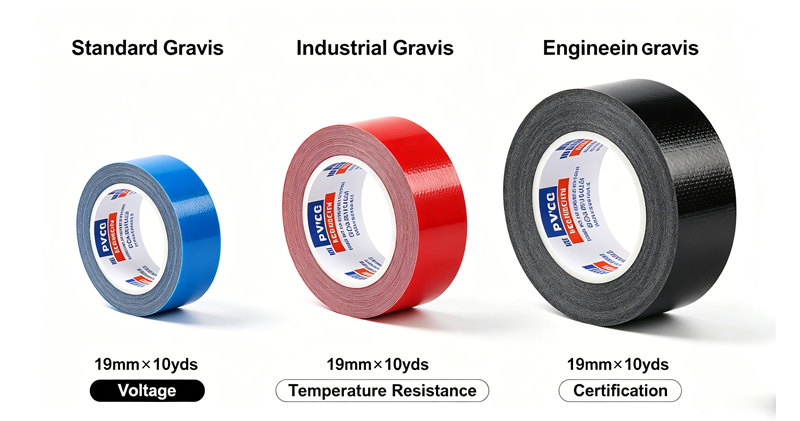
Many buyers are confused by the huge price gap of PVC electrical tape with similar specifications. This content abandons the traditional cost analysis, and focuses on value tiering. It compares raw materials, craftsmanship, certifications and service life of three product grades, sorts out precise matching rules for diverse working conditions, and answers frequent purchasing questions to help users make rational decisions.
PVC Electrical Tape: Value Tiering, Not Just Cost – Match Grade to Application