
PVC Foam & Specialty Tape Manufacturing: Engineering Solutions for Sealing, Cushioning, and Insulation
author: Lily
2026-05-06
For industrial buyers, PVC foam tape and specialty tape are far more than just “sticky strips.” They are precision-engineered components designed to solve critical engineering challenges: sealing out moisture, cushioning against impact, damping vibration, blocking noise, and isolating electrical currents. The true value of these tapes lies not in their form, but in their performance.
1. PVC Foam Tape: Material Structure & Performance Mechanism
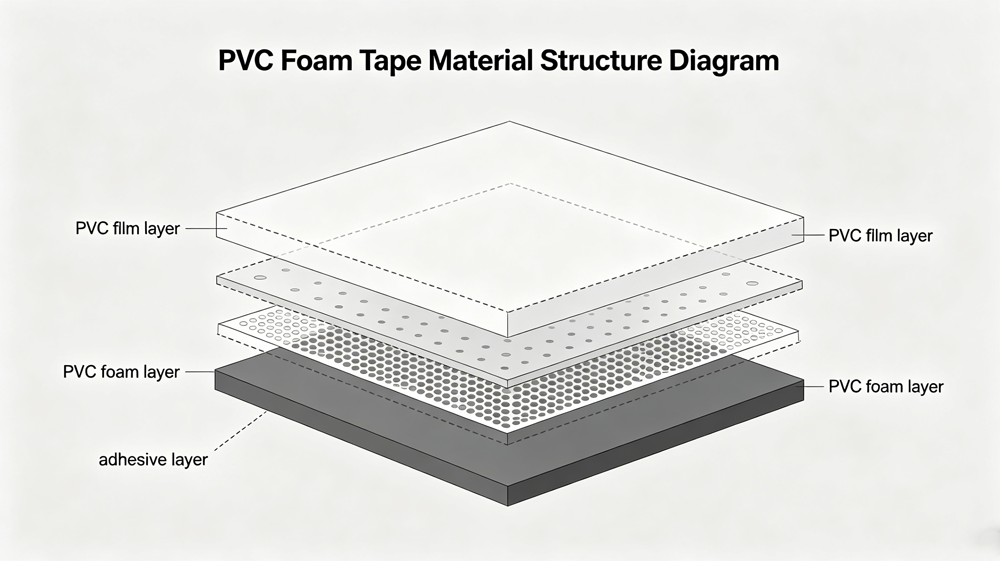
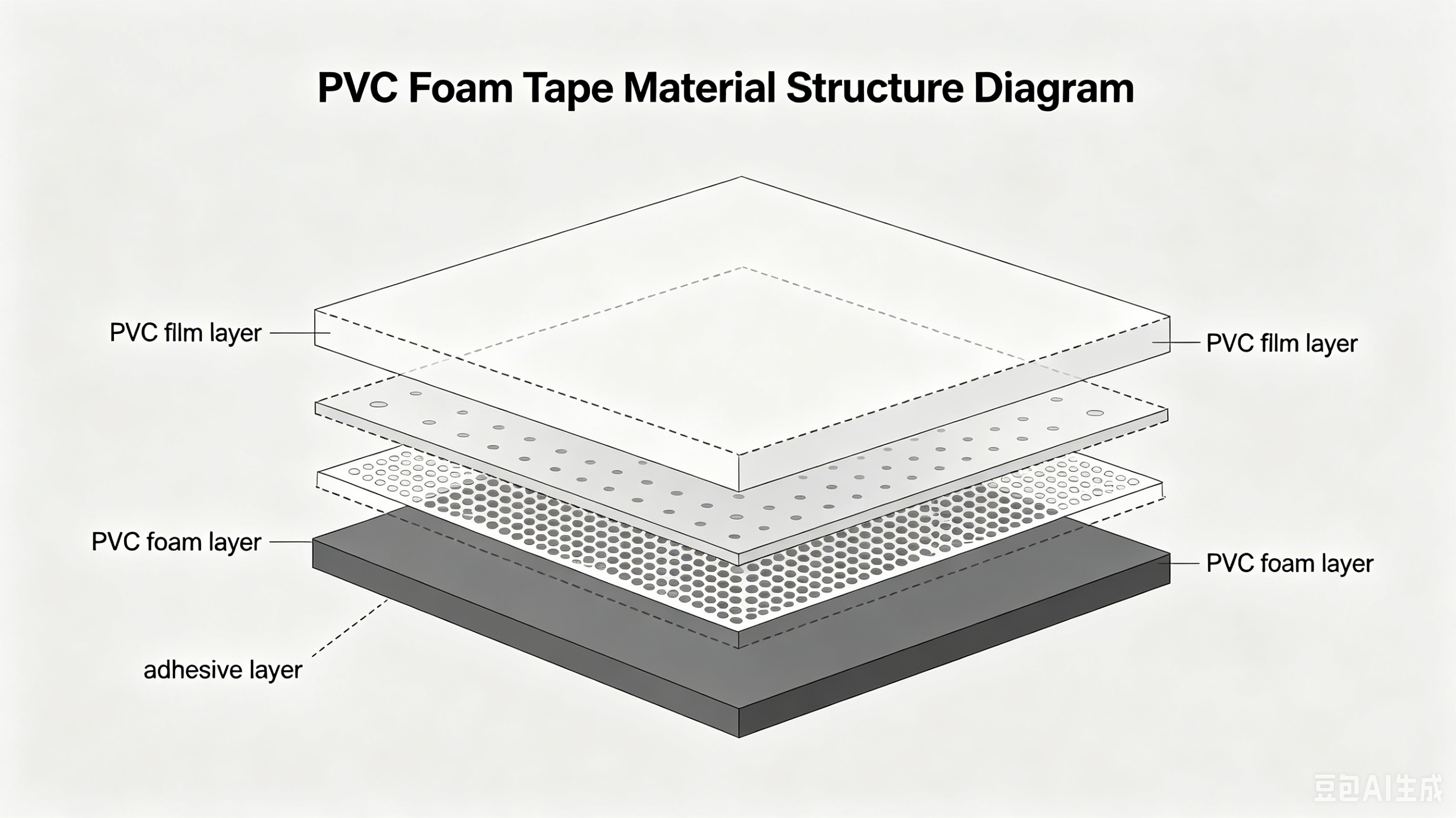
PVC foam tape is built on a three-layer engineered system that delivers reliable performance across demanding industrial environments:
- Closed-Cell PVC Foam Core: The foam structure provides compressibility and resilience, creating a durable seal that conforms to uneven surfaces. Its closed-cell design resists water absorption, preventing moisture and dust from penetrating the assembly.
- Pressure-Sensitive Adhesive Layer: A specially formulated adhesive ensures strong, lasting bonds to a wide range of substrates, including metal, plastic, glass, and wood. It maintains adhesion through temperature fluctuations and environmental exposure.
- Protective Release Liner: The liner prevents contamination during storage and application, ensuring consistent adhesive performance until the tape is ready for use.
Key performance mechanisms:
- Compression Set Resistance: The foam returns to its original shape after compression, maintaining a consistent seal over the product’s lifecycle.
- Vibration Damping: The foam absorbs and dissipates mechanical energy, reducing noise and preventing component wear caused by vibration.
- Thermal Insulation: The closed-cell structure traps air, creating an effective thermal barrier against temperature transfer.
2. Industrial Application Scenarios: Where Specialty Tapes Deliver Value
From automotive assembly to appliance manufacturing, these tapes play a critical role in countless industrial processes:
- Automotive Industry: Door sealants, weatherstripping gaskets, and vibration damping pads reduce road noise, seal out moisture, and protect sensitive components from impact.
- Appliance Manufacturing: Used for refrigerator door seals, HVAC duct insulation, and appliance vibration pads to improve energy efficiency and reduce operational noise.
- Building & Construction: Window and door weatherstripping, acoustic insulation tapes, and gap sealants enhance energy efficiency and indoor comfort.
- Electronics & Electrical: Insulation tapes for wiring harnesses, gap fillers for electronic enclosures, and vibration damping pads protect sensitive components from shock and environmental damage.
- Healthcare & Medical: Skin-sensitive edge tapes and foam tapes are used in medical devices and wound care applications, providing gentle yet secure adhesion.
3. Customization Capabilities for Specialty Tapes
One of the biggest advantages of working with a specialty tape manufacturer is the ability to tailor products to your exact requirements:
- Formulation Customization: Adjust adhesive strength, foam density, and surface coatings to meet specific application needs, such as high-temperature resistance, UV stability, or low-tack adhesion for sensitive surfaces.
- Size & Shape Options: Available in standard rolls, die-cut shapes, custom widths, and lengths to fit unique assembly requirements.
- Specialty Features: Add flame retardancy, anti-static properties, or conductive coatings for specialized industrial environments.
- Branding & Packaging: Custom printing and packaging solutions support OEM branding and streamline inventory management.
4. Performance Comparison: Standard vs. Specialty PVC Foam Tapes
Not all PVC foam tapes are created equal. Here’s how industrial-grade specialty tapes compare to standard alternatives:
| Feature | Industrial-Grade Specialty Tape | Standard PVC Foam Tape |
|---|---|---|
| Sealing Performance | Consistent compression set resistance for long-lasting seals | Prone to compression fatigue, leading to seal failure over time |
| Adhesion Strength | Formulated for specific substrates, even in extreme temperatures | Generic adhesive may fail in high/low temperatures or on difficult surfaces |
| Environmental Resistance | Resists UV, moisture, chemicals, and temperature fluctuations | Limited environmental stability, prone to degradation outdoors |
| Vibration Damping | Tuned foam density for optimal noise and vibration reduction | Generic foam provides inconsistent damping performance |
| Customization | Tailored formulations, sizes, and features available | Only standard sizes and generic formulations offered |
5. Industrial Manufacturing System: The Backbone of Reliable Tape
Consistent performance requires a robust manufacturing system:
- Closed-Loop Quality Control: Real-time monitoring of foam density, adhesive coating thickness, and dimensional accuracy ensures every roll meets specifications.
- Automated Production Lines: Precision calendering, coating, and slitting equipment delivers consistent tape thickness, width, and adhesive distribution across every batch.
- In-House Testing Facilities: Environmental chambers, adhesion testers, and vibration testing equipment validate performance under real-world conditions.
- Batch Traceability: Every production run is tracked from raw materials to finished products, ensuring quick resolution of any quality concerns.
6. Solving Common Industry Pain Points
Specialty tapes address some of the most persistent challenges in industrial manufacturing:
- Seal Leakage: Poor-quality foam tapes fail to maintain compression over time, leading to costly leaks. Industrial-grade tapes use high-resilience foam and durable adhesives to create long-lasting seals.
- Adhesion Failure: Generic tapes often fail to bond to low-surface-energy plastics or textured surfaces. Specialty formulations are designed for specific substrates, ensuring reliable adhesion.
- Vibration & Noise Issues: Inconsistent foam density in standard tapes provides inadequate damping. Tuned foam formulations deliver targeted noise and vibration reduction.
- Environmental Degradation: Standard tapes break down quickly in UV light, extreme temperatures, or chemical environments. Specialty tapes use UV-stabilized materials and resistant adhesives for long-term performance.
FAQ
Q1: Can you customize PVC foam tape for specific temperature ranges? A: Yes, we offer formulations designed for high-temperature applications (up to 120°C) and low-temperature environments (down to -40°C), ensuring reliable performance in extreme conditions.
Q2: What skin-sensitive tape options do you offer for medical applications? A: We produce low-tack, hypoallergenic skin-sensitive edge tapes designed for gentle adhesion to skin, suitable for medical devices, wound dressings, and wearable applications.
Q3: Can you provide die-cut shapes for automated assembly lines? A: Absolutely. We offer custom die-cutting services to produce precise shapes, gaskets, and pads that fit your assembly process perfectly, reducing waste and improving efficiency.
PVC Adhesive Tape Factory System: Your Trusted, Scalable Partner for Stable & Customizable Supply
PVC Tape Edge & Industrial Auxiliary Manufacturing: Why Edge Quality Defines Industrial Reliability
Related Article
This guide unifies standard terms of PVC insulating tape, clarifies naming differences in different scenarios, fixes common misunderstandings and offers templates for precise procurement inquiries.
PVC Tape for Electrical Insulation: Standard Naming, Terminology & Accurate Inquiry Guide

This guide covers standard electrical terms of PVC electrical tape, explains key parameters and offers scene-matched selection suggestions for electrical engineering buyers.
PVC Electrical Tape: Professional Terminology & Application Selection Guide
This buyer guide covers definition, core forms, specs, applications and comparisons of pvc insulation tape, answering common procurement questions and offering OEM customization solutions.
PVC Insulation Tape: Definition, Core Forms & Complete Buyer Guide
This article analyzes PVC electrical tape prices based on three performance grades rather than raw material costs, explains price differences, warns of low-cost pitfalls, and guides buyers to select matching tape for different wiring uses.
PVC Electrical Tape Price & Value Tiering: It’s Not Just About Raw Material Cost