
PVC Tape Edge & Industrial Auxiliary Manufacturing: Why Edge Quality Defines Industrial Reliability
author: Lily
2026-04-30
When industrial buyers source PVC edge banding tape, they often focus on surface specifications — color, width, and price — while overlooking a critical detail: the edge quality. For industrial applications, a tape with clean, consistent edges is not just a cosmetic feature; it’s a core performance factor that directly impacts assembly efficiency, product durability, and long-term reliability.
1. Why PVC Tape Edge Quality Determines Industrial Reliability
In industrial environments, even minor edge defects can trigger cascading problems:
- Assembly Downtime: Ragged edges, burrs, or sticky residue can jam automated machines, causing production line stops and costly delays.
- Product Failure: Uneven or curled edges lead to poor adhesion, creating gaps that allow moisture, dust, and contaminants to penetrate the assembly, compromising structural integrity and electrical safety.
- Waste & Rework: Defective tapes that peel, crack, or leave residue require rework, increasing labor costs and material waste.
For furniture, electrical enclosures, and automotive components, the edge of the tape is where performance begins and ends.
2. 5 Typical Industrial Failure Modes Caused by Edge Defects
Let’s break down the most common issues stemming from poor edge quality:
- Edge Curling & Lifting: Inconsistent slitting or coating causes the tape edge to lift from the substrate, creating gaps and weak points.
- Edge Fraying & Tearing: Rough, unpolished edges easily tear under tension, especially during high-speed automated application.
- Adhesive Squeeze-Out: Excess glue along the edge contaminates the surface, attracts dust, and prevents clean bonding.
- Uneven Slitting Width: Irregular tape widths lead to misalignment during application, resulting in unsightly, inconsistent finishes.
- Delamination at the Edge: Poor bonding between the PVC film and adhesive layer causes separation at the edge, leading to premature failure.
3. PVC Tape Slitting & Edge Treatment Technology Explained
High-quality edge results from three key manufacturing processes:
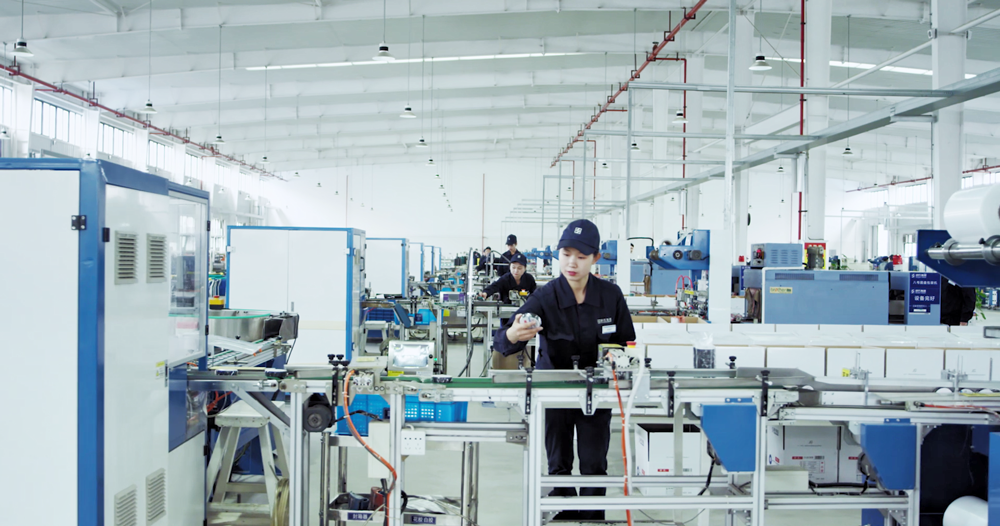
- Precision Slitting: Using high-speed rotary slitting machines with sharp, balanced blades to ensure straight, clean cuts with no burrs. Advanced systems use laser positioning and real-time width monitoring to maintain tolerance within ±0.1mm.
- Edge Polishing & Deburring: After slitting, the tape edges are treated with controlled heat or mechanical polishing to eliminate sharp burrs and smooth the cut surface, reducing the risk of tearing and curling.
- Controlled Coating & Curing: Precision coating processes ensure the adhesive does not spread beyond the tape’s width, preventing squeeze-out and maintaining consistent edge thickness. Proper curing stabilizes the adhesive layer, preventing edge lifting under temperature and humidity changes.
4. How Industrial-Grade Production Lines Ensure Consistency
Consistent edge quality requires a closed-loop production system:
- Automated Calendering: Uniform PVC film thickness across the entire roll ensures equal tension during slitting, preventing uneven cuts.
- Real-Time Quality Monitoring: Vision inspection systems scan every roll for edge defects, width variations, and coating irregularities, rejecting non-conforming products before they reach packaging.
- Stable Process Control: Temperature, tension, and speed are tightly controlled throughout production to eliminate variables that cause edge defects, even during high-volume runs.
- Batch Traceability: Every production run is logged with parameters and test results, allowing for quick root-cause analysis if issues arise.
5. Industrial Auxiliary Supply Chains: Ensuring Batch-to-Batch Stability
For OEM and industrial buyers, consistency across every batch is non-negotiable. A reliable supply chain delivers:
- Standardized Raw Materials: Uniform PVC film and adhesive formulations ensure identical performance in every production run.
- Continuous Production Capacity: Dedicated production lines for industrial-grade tape avoid downtime and delays, even for large orders.
- Rigorous Batch Testing: Each batch undergoes edge quality, adhesion, and dimensional testing to confirm compliance with specifications before shipment.
- Flexible Scheduling: Just-in-time production and warehousing solutions meet tight delivery schedules without compromising quality.
6. How to Choose a Reliable PVC Tape Manufacturer
When evaluating suppliers, focus on these key indicators of edge quality and manufacturing capability:
- Production Technology: Does the manufacturer use precision slitting and edge treatment equipment? Can they provide process photos or videos?
- Quality Control: Do they have in-house testing for edge defects, width tolerance, and adhesive squeeze-out? Can they provide batch test reports?
- Industrial Experience: Do they have a track record of supplying industrial clients, with case studies of solving edge-related problems?
- Customization Capability: Can they adjust edge treatment, width tolerance, and coating specifications to meet your unique application requirements?
- Certifications: Do they hold ISO 9001, IATF 16949, or other industry-specific quality certifications that validate their manufacturing processes?
FAQ
Q1: How do you control edge quality for large industrial orders? A: We use automated vision inspection systems and 100% on-line monitoring to check every roll for edge defects, with strict quality gates before packaging and shipment.
Q2: Can you customize the edge treatment for specific applications? A: Yes, we offer tailored edge solutions, including polished edges for furniture applications, anti-squeeze-out coatings for automated assembly, and low-curl formulations for high-temperature environments.
Q3: What tolerances do you maintain for slitting width? A: Our industrial-grade slitting process maintains width tolerances as tight as ±0.1mm, depending on the product specifications.
PVC Foam & Specialty Tape Manufacturing: Engineering Solutions for Sealing, Cushioning, and Insulation
PVC Electrical Tape Manufacturer System: What Separates a Reliable System Manufacturer from the Rest
Related Article
This guide unifies standard terms of PVC insulating tape, clarifies naming differences in different scenarios, fixes common misunderstandings and offers templates for precise procurement inquiries.
PVC Tape for Electrical Insulation: Standard Naming, Terminology & Accurate Inquiry Guide

This guide covers standard electrical terms of PVC electrical tape, explains key parameters and offers scene-matched selection suggestions for electrical engineering buyers.
PVC Electrical Tape: Professional Terminology & Application Selection Guide
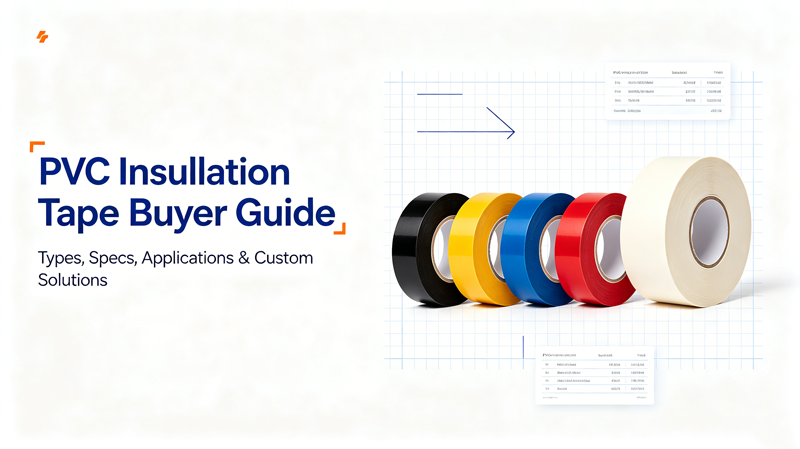
This buyer guide covers definition, core forms, specs, applications and comparisons of pvc insulation tape, answering common procurement questions and offering OEM customization solutions.
PVC Insulation Tape: Definition, Core Forms & Complete Buyer Guide
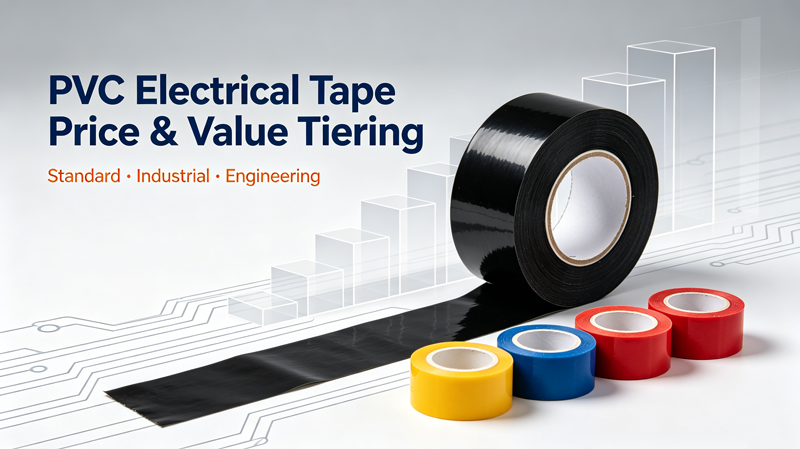
This article analyzes PVC electrical tape prices based on three performance grades rather than raw material costs, explains price differences, warns of low-cost pitfalls, and guides buyers to select matching tape for different wiring uses.
PVC Electrical Tape Price & Value Tiering: It’s Not Just About Raw Material Cost