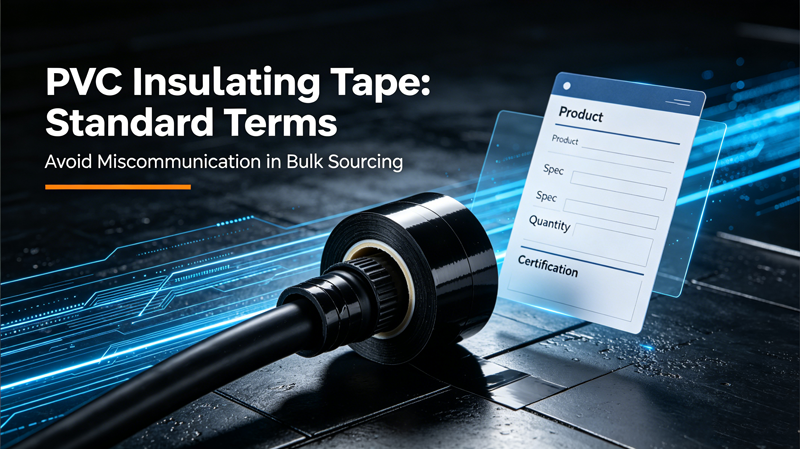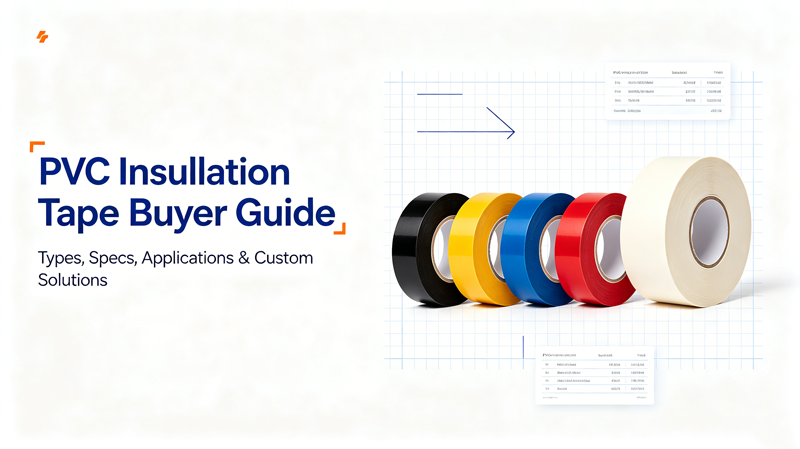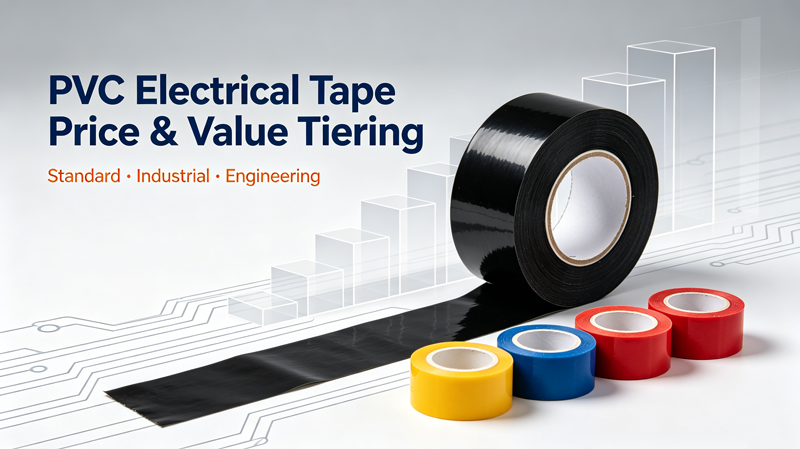
Comprehensive Analysis of Industrial Tape Classification Including Electrical Tape
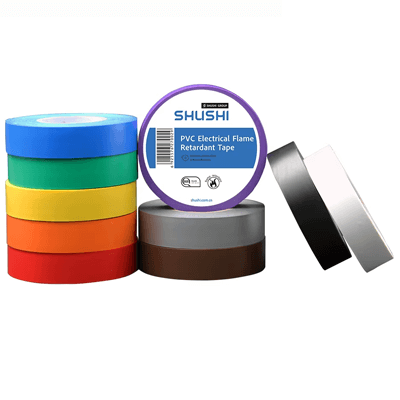
I. Introduction to Non-Woven Single-Sided Tape (Associated with Electrical Tape)
Tape is widely used in daily life and industrial scenarios. Among them, electrical tape, as a special-purpose tape, its quality is directly related to electrical safety. Inferior products may cause risks such as electric leakage and short circuit. Whether it is ordinary transparent tape, yellow tape, or special tapes like PVC electrical tape, mastering scientific quality identification methods is crucial. The following will share practical tape quality identification techniques from multiple dimensions such as appearance, specifications and performance, taking into account the characteristic differences between general tape and electrical tape.
II. Core Features of Non-Woven Single-Sided Tape
Non-woven single-sided tape uses non-woven fabric as the base material, and its features are significantly different from PVC electrical tape, focusing more on the comprehensiveness of adhesion performance, as follows:
1. Super Strong Adhesion Strength: Advantage in Multi-Material Adaptation
The tape has extremely high adhesion strength and excellent adhesion effect on various common industrial materials such as metal, foam and plastic. This is in sharp contrast to PVC electrical tape, which focuses on insulation and whose adhesion strength only meets its own fixing needs, enabling it to be competent for tight bonding scenarios of various materials.
2. Excellent Initial Adhesion and Curved Surface Adaptability: Adaptation to Complex Scenarios
The product has high initial adhesion, which can be quickly fixed after pasting. At the same time, it has good curved surface resistance, which can closely fit curved or special-shaped surfaces and is not easy to fall off. In contrast, PVC electrical tape is prone to warping due to adhesion attenuation after long-term pasting on curved surfaces, and this feature has become one of the core advantages of non-woven single-sided tape.
3. Wide Temperature Range and Aging Resistance: Strong Environmental Adaptability
The tape can work stably in a wide temperature range of -40℃~140℃, and has good aging resistance, which can adapt to high and low temperature alternation and long-term use scenarios. Although the upper limit of high temperature resistance is lower than that of high-temperature electrical tape, it is much higher than that of ordinary PVC electrical tape (conventional temperature resistance is 80-100℃), adapting to more industrial environments.
III. Core Uses of Non-Woven Single-Sided Tape
Different from PVC electrical tape which is used for insulation protection, non-woven single-sided tape takes bonding and fixing as its core function and is widely used in assembly scenarios of multiple industries. The specific uses include:
- Electronic and Electrical Field: Used for bonding and fixing plastic nameplates and plastic membrane switches. In this field, it is used in conjunction with electrical tape - electrical tape is responsible for circuit insulation, and non-woven single-sided tape is responsible for component assembly and fixing.
- Automotive Industry: Adapts to the bonding of various invisible decorations in automotive interiors, such as the bonding of roof linings during automobile production. It can also be used for fixing special-shaped components inside automobiles, solving the aesthetic problem of traditional fasteners.
- Air-Conditioning Industry: Realizes the bonding and fixing of decorative panels and foam materials. Its excellent adhesion to foam materials avoids the problem that ordinary tape is easy to fall off when bonding foam, improving assembly stability.
As a special insulating tape, the core features of glass cloth tape are reflected in key dimensions such as thermal stability, mechanical properties and adhesion performance, as follows:
1. Excellent Thermal Stability: Core Guarantee for High-Temperature Scenarios
Glass cloth tape has excellent thermal stability, which can work continuously at 180℃ and withstand high-temperature impact of 260℃ for a short time. This performance is far superior to ordinary PVC electrical tape (conventional temperature resistance is about 80-100℃), enabling it to adapt to high-temperature working conditions such as Class H heat-resistant insulation, and solving the problem that ordinary electrical tape is prone to aging and insulation failure in high-temperature environments.
2. Excellent Mechanical Properties: Adapt to Complex Scenarios
The product has both flexibility and tear resistance, strong adhesion and not easy to deform, which can perfectly fit various special-shaped surfaces for pasting protection. At the same time, it has high mechanical strength, which can achieve tight and firm wrapping effect when used for coil winding. This feature makes it more reliable than ordinary electrical tape in the insulation of motors and electronic components.
3. No Residue Advantage: Ensure Product Cleanliness
Different from some electrical tapes that are easy to leave residue after high temperature, glass cloth tape will not leave adhesive residue when peeled off after long-term high-temperature curing. This feature can avoid subsequent cleaning processes, improve production efficiency, and is especially suitable for electronic component production scenarios with high requirements for surface cleanliness.
4. High Cost-Effectiveness: Preferred for Import Substitution
While achieving high performance, glass cloth tape has extremely high cost-effectiveness. Its various performance indicators are comparable to many well-known imported brand products, but the procurement cost is lower, providing a high-quality alternative for enterprises pursuing high quality and economy.
Ordinary tape and high-temperature tape have obvious differences in price, performance and applicable scenarios, which are specifically reflected in the following aspects:
1. Price and cost: The price of ordinary tape is much lower than that of high-temperature tape, which is determined by its raw material cost and production process - ordinary tape mostly uses polyethylene substrate and general-purpose pressure-sensitive adhesive, while the cost of special high-temperature resistant raw materials for high-temperature tape is higher.
2. Core performance: Ordinary tape does not have high-temperature resistance and is prone to problems such as adhesive layer melting and substrate deformation in high-temperature environments; at the same time, its insulation and corrosion resistance are also far inferior to high-temperature tape. It is particularly noteworthy that counterfeit high-temperature tapes on the market are mostly impersonated by ordinary tapes, whose high-temperature resistance and insulation are greatly reduced, which will seriously affect product use and even cause safety hazards.
3. Applicable scenarios: There is a clear boundary between the applicable scenarios of the two. High-temperature tape can be used in high-temperature, high-demand industrial scenarios that ordinary tape cannot handle, while ordinary tape is only suitable for conventional environments such as daily packaging and office pasting, and cannot be used in high-temperature working conditions.
IV. Key Application Scenarios and Adaptation Advantages of Non-Woven Single-Sided Tape
Based on the above features, the tape shows irreplaceable advantages in specific scenarios and complements electrical tape in scenarios:
1. Core Scenario in Automobile Production
In the bonding process of automobile roof linings, non-woven single-sided tape can realize tight bonding between the lining and the car body with its high initial adhesion, curved surface adaptability and aging resistance, and is not easy to fall off after long-term use. In this scenario, PVC electrical tape is only used for insulation protection of roof circuits, and the two have clear divisions of labor and jointly ensure assembly quality.
2. Foam and Smooth Material Bonding Scenarios
The tape can form a stable bonding effect for foam materials and various smooth materials, especially suitable for the bonding of smooth materials on the open side of the tape. In contrast, PVC electrical tape has poor adhesion to foam materials and is prone to peeling, which cannot adapt to such scenarios.
3. General Assembly Scenarios in Multiple Industries
Its application scope covers core industries such as automobiles, plastics and air-conditioning, and has become a core consumable for component bonding and fixing in various industries. In the production lines of these industries, it is often used in conjunction with electrical tape and high-temperature tape to form a complete assembly and protection solution.
Complete Analysis of Tape Classification Including Electrical Tape Bilingual Illustrated Guide
Features and Uses of Non-Woven Single-Sided Tape | Bilingual Guide With Electrical Tape Comparison
Related Article