
Wire Harness: Market & Supply Chain – A Practical Decision Guide for OEMs, Tier Suppliers & Procurement Teams
author: Lily
2026-05-12
This page is built as an actionable supply chain decision tool, rather than a simple market introduction. It unifies price, lead time, compliance and risk analysis to serve three core users: OEMs, Tier suppliers and procurement professionals, delivering practical references for daily sourcing, engineering and supply chain management.
1. Core Definition: Wire Harness Is a Constrained Supply Chain System
Wire harnesses are never ordinary commodities. They are highly constrained systems defined by three inherent traits. First, they are labor-intensive with complicated manufacturing processes; over 70% of assembly work relies on manual operation, making production capacity hard to replicate rapidly. Second, they operate within a multi-tier collaboration ecosystem, following the typical flow from OEMs to Tier 1 suppliers and then to Tier 2 manufacturers, where every link affects overall delivery and quality. Third, strict compliance rules act as rigid constraints. Automotive regulations, safety standards and global environmental policies (RoHS, REACH) must be fully met throughout design, production and delivery.
2. Market Essence: Demand Driven by Electrical Architecture Complexity
Market demand is fundamentally decided by the complexity of electrical architectures across different industries, instead of vague market volume:
- Traditional fuel vehicles: Stable harness length and circuit numbers, bringing steady and routine orders.
- New energy & intelligent vehicles: Surge of ECUs and sensors requires high-voltage, shielded and lightweight harnesses, pushing up product value and technical thresholds.
- Industrial equipment: Prioritizes long-term reliability and personalized customization, with diversified small-batch orders.
3. Hierarchical Supply Chain Structure
The industry adopts a clear three-tier supply chain:
- Upstream: Raw materials (copper, insulation materials) and core components (connectors, terminals), which decide basic cost and performance.
- Midstream: Tier 1 and Tier 2 manufacturers responsible for cutting, crimping, assembly and testing. Tier 1 mainly serves direct OEM orders, while Tier 2 focuses on supporting Tier 1 and wholesale orders.
- Downstream: End users covering automotive, industrial automation, aerospace and home appliances, plus global wholesalers and distributors.
4. Cost Structure Breakdown
Total costs are divided into five clear parts for straightforward comparison:
- Materials (60%–72%): Copper wires and connectors take the largest share, the primary source of cost fluctuations.
- Labor (16%–40%): Manual assembly leads to large regional differences in labor expenses.
- Tooling & Testing (5%–15%): One-time fixture cost and regular quality inspection fees.
- Packaging & Logistics (5%–7%): Special anti-winding and shockproof packaging for cross-border transportation.
- Overhead & Profit (8%–15%): Factory operation and service costs.
5. Root Causes of Price Fluctuations
- Raw material volatility: Copper price swings directly impact 60%+ of total costs, causing frequent price adjustments.
- Labor cost changes: Wage growth in manufacturing regions raises processing fees.
- Customization degree: Complex circuits, special connectors and high-standard certification will push prices up by 20%–30%.
- Order volume: Large-batch orders enjoy obvious volume discounts, while small customized orders carry premium prices.
6. Delivery Capacity & Capacity Logic
Harness production capacity cannot be expanded quickly. Standard products have a lead time of 3–6 weeks, while complex customized harnesses need 8–14 weeks. Key rules: High automation lines suit mass standard orders; manual workshops are for complex customized products. Seasonal labor shortages and component stockouts are the main reasons for delayed delivery. Stable capacity matching is more important than low prices for long-term cooperation.
7. Key Supply Chain Risks
- Material risk: Shortage of high-end connectors and sharp copper price hikes.
- Delivery risk: Labor shortages and multi-tier coordination failures lead to delays.
- Compliance risk: Unqualified materials fail to meet automotive, safety or environmental standards, resulting in returns and order suspension.
- Geopolitical risk: Tariff changes and regional trade policies affect cross-border delivery and costs.
- Quality risk: Inconsistent manual processing causes defective products in batches.
8. Practical Supplier Selection Criteria

Match suppliers according to your role and demands:
- For OEMs: Prioritize Tier 1 manufacturers with complete certification, mature project experience and system delivery capabilities.
- For Tier suppliers: Choose partners with stable capacity, flexible customization ability and transparent cost structure.
- For procurement teams: Verify compliance certificates, on-time delivery rate, material traceability and after-sales response speed; avoid selecting suppliers merely based on the lowest quote.
9. Regional Supply Chain Pattern
- Asia-Pacific: The global core production base with complete supporting facilities, cost advantages and full product ranges, dominating mass production and export orders.
- North America & Europe: Focus on high-end automotive and aerospace harnesses with strict standards; many local OEMs adopt nearshore sourcing to shorten lead time.
- Southeast Asia & Mexico: Benefiting from reshoring trends, they gain advantages in orders targeting North America and Europe due to tariff preferences.
10. Future Industry Trends
- Lightweight: Aluminum and hybrid conductors gradually replace partial copper materials to cut weight for new energy vehicles.
- High voltage & intelligence: EV 800V platforms and intelligent driving systems drive upgrades of high-voltage and data transmission harnesses.
- Production automation: Reduce manual reliance to stabilize quality and improve efficiency.
- Strict compliance: Global environmental rules become more rigorous, and green production turns into a basic threshold.
- Regionalized supply chains: More clients adopt dual-supplier strategies to mitigate single-source risks.
11. FAQ
Q1: How to judge if a quote is reasonable?
A: Split the price by material, labor and testing fees, and compare it with the local industry average; never ignore compliance and quality costs for a lower price.
Q2: How to shorten lead time effectively?
A: Adopt standard parts in design, place bulk orders in advance, and cooperate with suppliers with nearby warehouses.
Q3: What compliance certificates must cross-border harnesses have?
A: Automotive products need car-grade certifications; all export goods must pass RoHS and REACH environmental tests.
Q4: How to avoid supply chain risks?
A: Build a dual-supplier system, track copper and connector inventory in real time, and sign clear liability clauses for delayed delivery and defective products.
PVC Tape Pricing System: A Complete Guide for B2B Buyers
PVC Tape: Ideal Choice for Wholesale & Bulk Procurement
Related Article
This guide unifies standard terms of PVC insulating tape, clarifies naming differences in different scenarios, fixes common misunderstandings and offers templates for precise procurement inquiries.
PVC Tape for Electrical Insulation: Standard Naming, Terminology & Accurate Inquiry Guide

This guide covers standard electrical terms of PVC electrical tape, explains key parameters and offers scene-matched selection suggestions for electrical engineering buyers.
PVC Electrical Tape: Professional Terminology & Application Selection Guide
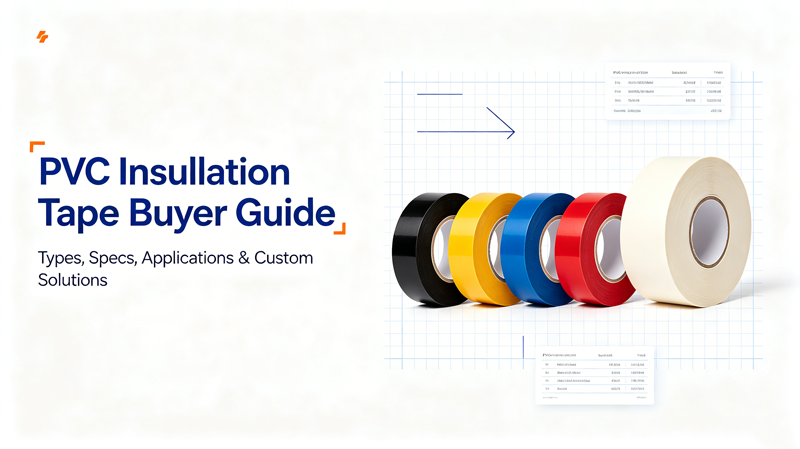
This buyer guide covers definition, core forms, specs, applications and comparisons of pvc insulation tape, answering common procurement questions and offering OEM customization solutions.
PVC Insulation Tape: Definition, Core Forms & Complete Buyer Guide
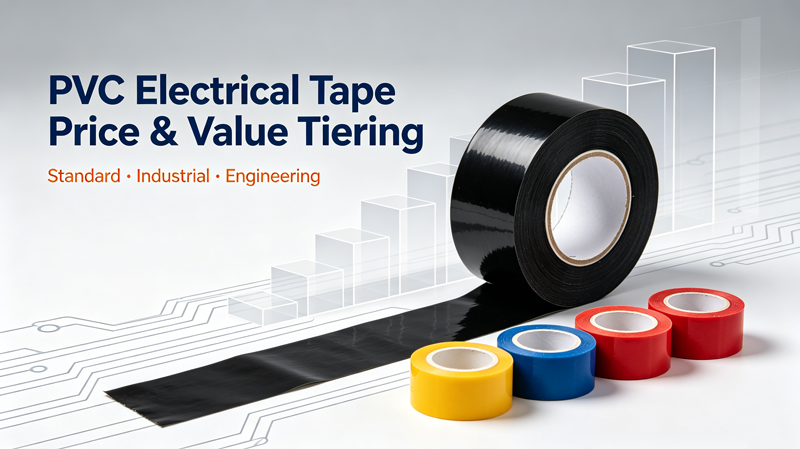
This article analyzes PVC electrical tape prices based on three performance grades rather than raw material costs, explains price differences, warns of low-cost pitfalls, and guides buyers to select matching tape for different wiring uses.
PVC Electrical Tape Price & Value Tiering: It’s Not Just About Raw Material Cost